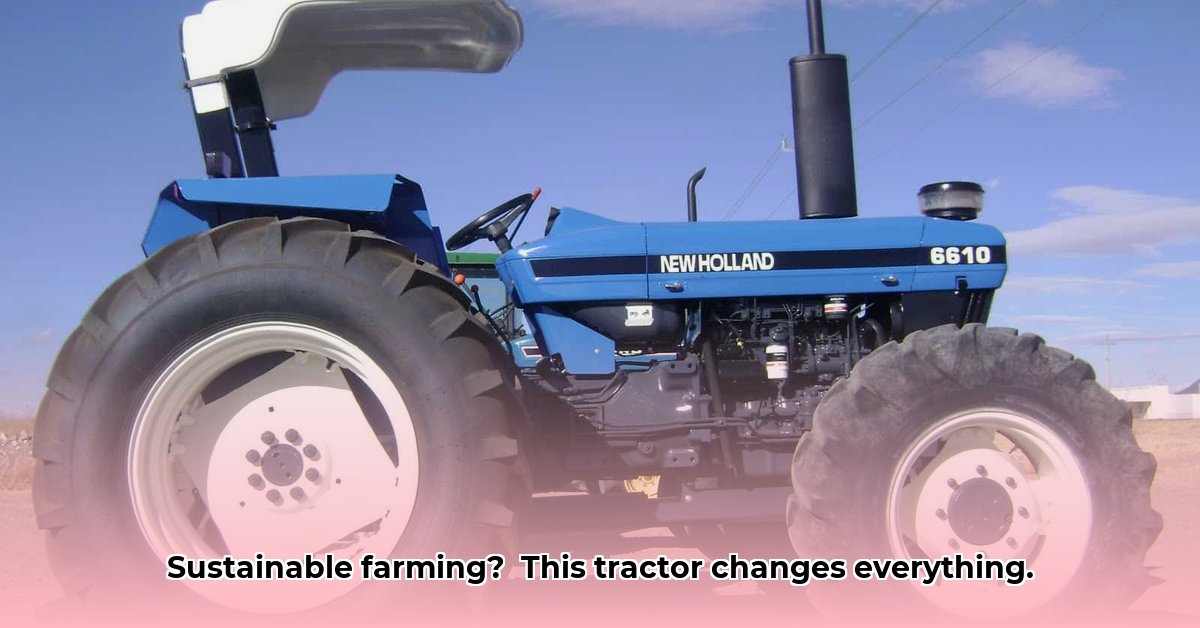
The New Holland 6610 tractor, a stalwart of farms from 1982 to 1993, offers a compelling case study in the evolution of sustainable agriculture. While a stark contrast to today's technologically advanced machines, examining its strengths and weaknesses provides crucial insights into modern farming practices and the challenges that remain. This review will assess its performance, fuel efficiency, and overall contribution to sustainable farming practices. For further information on its hydraulic system, see this helpful resource.
A Workhorse of a Bygone Era: Power and Performance
Imagine a pre-GPS, pre-electronics farming world. The 6610, with its robust 4.4-liter diesel engine, was a true workhorse. Its powerful hydraulic system easily handled various implements, from plows to seed drills. The availability of both two-wheel drive and mechanically front-wheel drive (MFWD) options ensured adaptability across diverse terrains. While its fuel efficiency pales in comparison to modern standards, it was considered respectable for its time. But how does this translate to modern sustainable farming ideals?
Sustainability: A Nuanced Perspective
Assessing the 6610's sustainability requires a balanced perspective. Its simpler mechanical design, with fewer computerized parts, meant fewer potential breakdowns and lower repair costs. This inherent reliability is a cornerstone of sustainability, minimizing resource waste associated with frequent repairs. However, its fuel economy falls short of modern standards, and it lacks the advanced emission controls of contemporary tractors. The absence of precision technology, like GPS, resulted in less efficient fertilizer and pesticide application, potentially impacting the environment.
Lessons from the Past, Shaping the Future
The 6610 undeniably advanced farm mechanization, significantly increasing efficiency compared to earlier methods. However, against modern sustainability goals, it presents limitations. Its legacy emphasizes the imperative for continuous advancements in agricultural technology. Yet, the tractor's longevity – its reliable operation for many years – highlights the value of durable designs that minimize the need for frequent replacements.
Long-Term Farmer Considerations: A Careful Balancing Act
For farmers still operating a 6610, preventative maintenance is paramount. Regular servicing and inspections extend its lifespan and reduce replacement costs. However, for true long-term sustainability and efficiency, upgrading to a newer, more fuel-efficient model equipped with precision farming technology is a significant consideration. The decision involves weighing the costs of a new tractor against the potential economic and environmental benefits of increased efficiency and reduced resource consumption. This balance is crucial for long-term farming success.
The 6610's Enduring Legacy: Ongoing Insights
The 6610 provides invaluable lessons for all agricultural stakeholders. Agricultural historians can study its design, operational history, and impact on farming to understand the evolution of agricultural technology. Equipment manufacturers can learn from its strengths (durability) and weaknesses (fuel efficiency, lack of precision farming), informing the design of future, more sustainable machinery. This ongoing analysis shapes a future optimizing the balance between durability and efficiency.
Actionable Steps for All Stakeholders
Here's a breakdown of practical steps for different groups:
- 6610 Owners: Prioritize regular maintenance and keep detailed records; Evaluate the financial and environmental impact of upgrading.
- Agricultural Historians: Gather and analyze data on the 6610's impact; Use advanced sustainability metrics to assess its historical contribution.
- Equipment Manufacturers: Invest in research into sustainable materials and designs; Develop more environmentally friendly and fuel-efficient equipment.
- Policy Makers: Support initiatives for responsible tractor disposal; Provide incentives for farmers adopting sustainable agricultural technologies.
Understanding the Risks: A Comprehensive Assessment
Considering the risks associated with using a 6610 is crucial:
| Risk Category | Risk Factor | Likelihood | Impact | Mitigation |
|---|---|---|---|---|
| Mechanical Failure | Age-related component wear and tear | Moderate | High | Proactive maintenance, diligent inspections |
| Safety Hazards | Absence of advanced safety features | Low | Moderate | Proper operator training, strict adherence to safety protocols |
| Environmental Impact | Relatively higher fuel consumption, emissions | Moderate | Moderate | Responsible operation, fuel-efficient practices |
| Parts Availability | Difficulty sourcing specific parts | Moderate | Moderate | Establishing relationships with parts suppliers, using salvaged parts |
The New Holland 6610, a product of its time, offers valuable insights. Its legacy underscores the continuous evolution of sustainable farming and the ongoing quest for improvement. The journey towards truly sustainable practices is ongoing, and learning from the past, like the 6610, paves the way for a more environmentally responsible future. The balance between practicality and sustainability remains a key factor in modern agriculture.